
"The real learning happened in the doing"
Lina Khawaja, a participant in our first Effective Management of Systems Programming cohort, and Marshall Bear, a core trainer and post-workshop coach, look back on the year that produced her case study on Jordan's cybersecurity labor market.
The Opportunities Unlimited team built the Effective Management of Systems Programming training around a problem we kept running into. People can learn a market systems approach in a workshop, but using it in their own market, with all the complications that brings, is much harder. Participants leave the residential week with a challenge from their own work, and a coach to help them address over the following 12 months.
Lina Khawaja, who joined the first cohort, has just published a case study on Jordan’s cybersecurity labor market, written for the people who shape it. In it, she makes a market systems argument: Jordan is not short of digitally educated young people, but it lacks workers that employers trust enough to hire, and a company like Green Circle could build a viable business out of closing that gap. We asked Lina and her coach, Marshall Bear, how the year went.
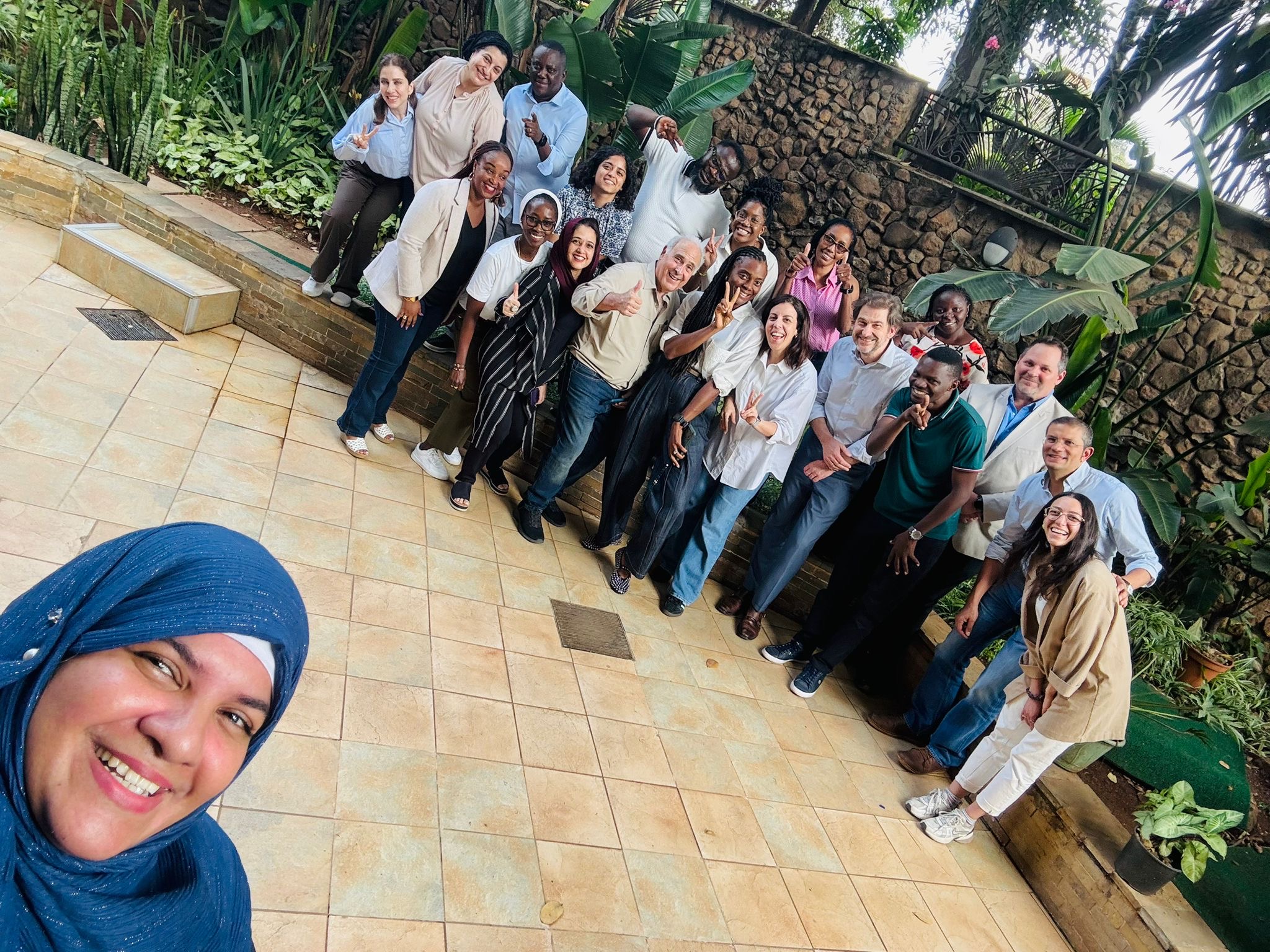
Lina, on why she signed up and where she started
I came in highly motivated. I had become convinced that Market Systems Development was going to matter more and more in our field, and that it would play a much bigger role in my own work. That is already proving true. I am now seeing major donor programs in Jordan built around economic reform and a market systems approach, more prominently than I have before.
But I had no way yet to put it into practice. I had done an MSD certification with the ILO, but it stayed theoretical, and I never got to apply it directly. My real strength was the market itself: knowing the actors, the challenges, the openings. I needed to connect that to MSD concepts, and especially to the commercial viability lens.
This is where the right coach matters enormously. My first coaching arrangement did not quite match my pace or my expectations, which was a little deflating so early on. I was impressed with how quickly the Opportunities Unlimited team sorted it out and paired me with Marshall. That made all the difference. He understood where I was and where I wanted to go, adapted to how I work, pushed my thinking, and, as I started drafting the case study, helped me see what to keep and what to let go. The reference materials he pointed me to gave me a foundation, and the confidence to be more critical with the concepts.
Marshall, on what her year shows
From where I sat, Lina’s year is instructive, and I would point to two moments.
- The first was hers alone. In her opening draft she took what she had learned in the residential week and laid it out methodically: the concepts and principles of systems thinking, the interventions, the role development agencies play in opening up inclusive growth. My job at that stage was to keep her moving and save my input for where it would count.
- The second is where I helped her define the audience, and what that audience cares about. Lina knew from the outset that she wanted to make the commercial case for services that could unblock the constraints keeping new entrants, especially women, out of Jordan’s cybersecurity sector. The hard part was getting sharp about who she was writing for and then deciding what to keep and what to drop from that first draft. That is where I could help, because I know the literature and could see where her case might add to it.
She came in largely new to the systems approach and put in the time to translate it into how she thinks about her work. That takes motivation, and it takes sweat.
Lina, on where the learning happened
Pulling the paper into its final shape took real time and persistence. That is also where the learning was: putting what I had learned into practice, challenging my own assumptions, and translating theory into real business and market realities. Working through the commercial viability and private-sector-incentive angle, while keeping the systemic impact at the center, taught me more than any amount of reading would have.
Why we at Opportunities Unlimited run the program this way
That, for us, is the point of the format. Applying systems concepts to a specific context is one of the real difficulties in MSD, and in development more broadly. Effective Management of Systems Programming exists for someone who already knows their context and is working out how to bring new concepts to it, with a coach alongside.
Our next cohort begins at the Serena Hotel in Nairobi, 22 to 26 March 2027, followed by twelve months of coaching. If you know your context well and want help applying systems thinking to it, we would like to hear from you. The fee is US $2,950 for the year, with 10% off if you register before 31 January 2027.