
Why we run the “Effective management of systems programming” Executive MBA-style program
By Harald Bekkers
As a field, systems development is good at working out what good practice looks like. I know because I have been leading systems development programs for over 20 years. Failure is rarely due to a lack of technical skill. Instead, it tends to come down to poor management through the stages of learning what works, scaling up, and leaving a better, more inclusive and resilient system behind.
We have the knowledge, but we don’t have enough people who can implement it because that know-how tends to sit in a small number of projects and organizations. Those are the places that get systems work right and train the people who will do it next. We call them hotspots, and it’s disappointing to see how little of what they know makes it out.
A challenge we face as a sector is that what makes you good at systems development isn’t necessarily something you can write down. When I ask strong practitioners how they got there, they hardly ever credit a course or formal implementation guidelines. Instead, they remember a specific program where they learned by doing or a manager showed them the ropes. They learned by doing the work, beside someone in a hotspot who had already figured it out.
What they picked up has more to do with management than with technique. Systems work runs through other people. As practitioners, we are there to shift a system we don’t control, and shouldn’t, through partners who don’t answer to us. Time and flexibility rather than money are our levers. Managing like that goes against everything a delivery background trains into us.
In a conventional program our job is to plan the work and hold the team to the targets set at the start. Here, the work needs a team that can read a shifting situation and change course without being told, and a manager who treats the person who says “this isn’t working” as the most useful one in the room. These are skills best learned on the job, which is why they stay bottled up where they already live, while capable, technically strong organizations keep struggling with a shift that has nothing to do with how clever their people are.
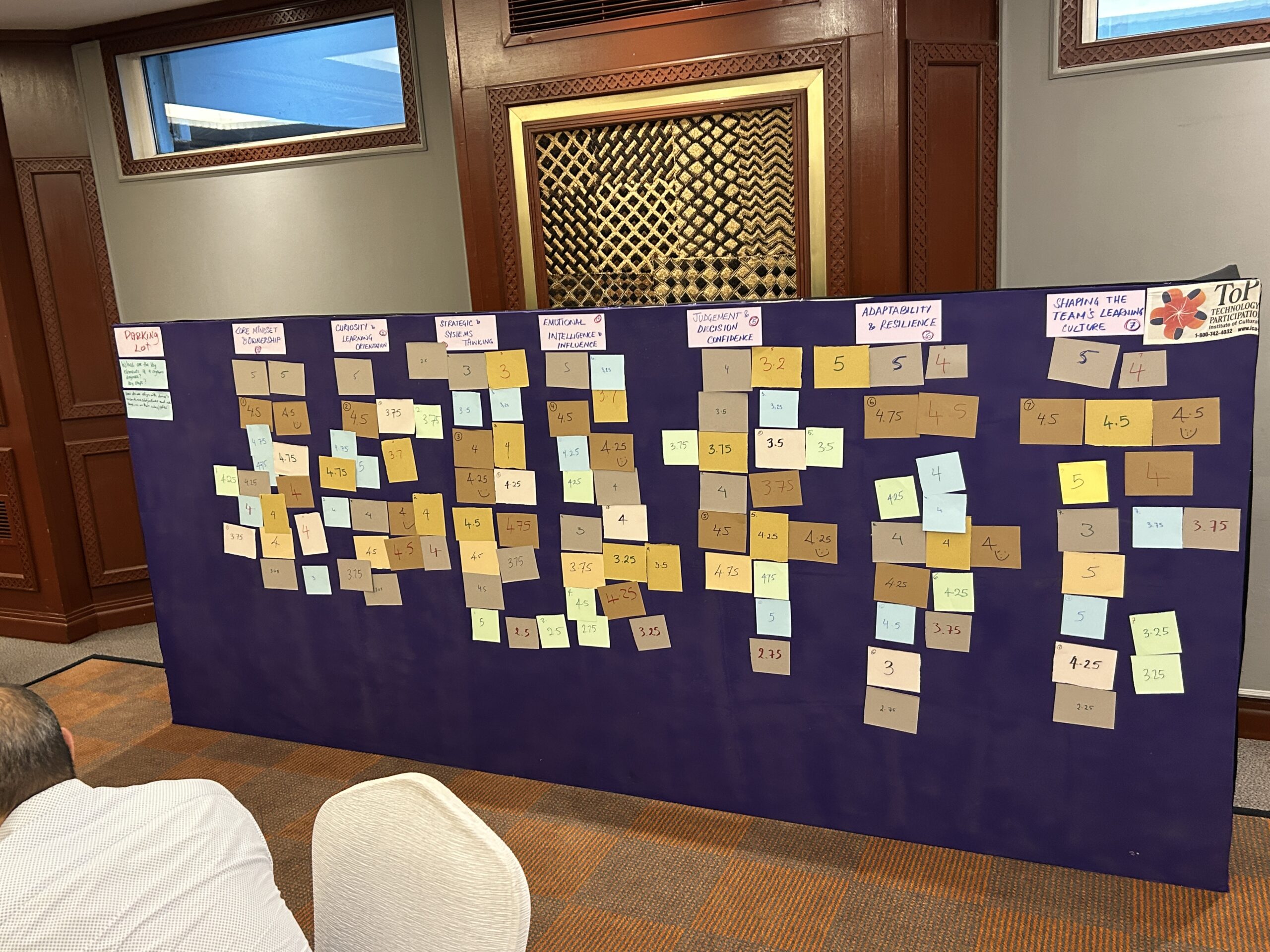
That’s why this program exists. We’re building the conditions for the next hotspots to form by putting people in a room to work on a real problem they face, before pairing them with a coach for the next 12 months. The format borrows from an Executive MBA.
First, participants spend five days with the faculty (including myself) and their peers. They leave that week with an organizational change initiative for their own program, then put it into practice with the coach. In total, we provide 45 hours of instruction, including 35 during the residential week followed by 10 hours of coaching. Through the teaching, participants learn to define the system they’re trying to change and build a strategy for it, put together and support strong teams, pick partners who keep local actors in charge of their own change, diagnose and realign whatever is dragging on performance, and win the trust of the people they rely on.
People in our last cohort have been coached on problems as different as growing the creative industry in Morocco and running public-private partnerships in Kenya, and the management questions turn out to be much the same across them.
We’re recruiting the next cohort now. It opens with a residential week at the Serena Hotel in Nairobi, 2 to 6 November 2026, and continues with 12 months of coaching. It’s for people working in donor agencies, implementing organizations, consultancies and non-profits who have a couple of years of systems work behind them and want to lead it better. The fee is US $2,950 for the year.