
By Muneeb Zulfiqar
A recent trip to Malawi challenged my assumptions about what climate adaptation looks like and convinced me that the development sector needs a serious rethink on how it approaches scale.
Key takeaways
- Budgets are shrinking, but the need is growing. Repeatedly training the same farmers and setting up the same savings groups cannot deliver resilience at the scale the climate crisis now demands.
- The private sector is already there, even in one of the world’s poorest countries. Agro-dealers, microfinance institutions, and solar companies serve smallholder farmers commercially, and they have a business reason to keep showing up long after donor projects close.
- The route to scale is a hybrid model. Keep community structures at the centre for trust and reach, but deliberately build in the local market actors who can sustain the finance, products and services that make resilience last.
What the Project Delivered
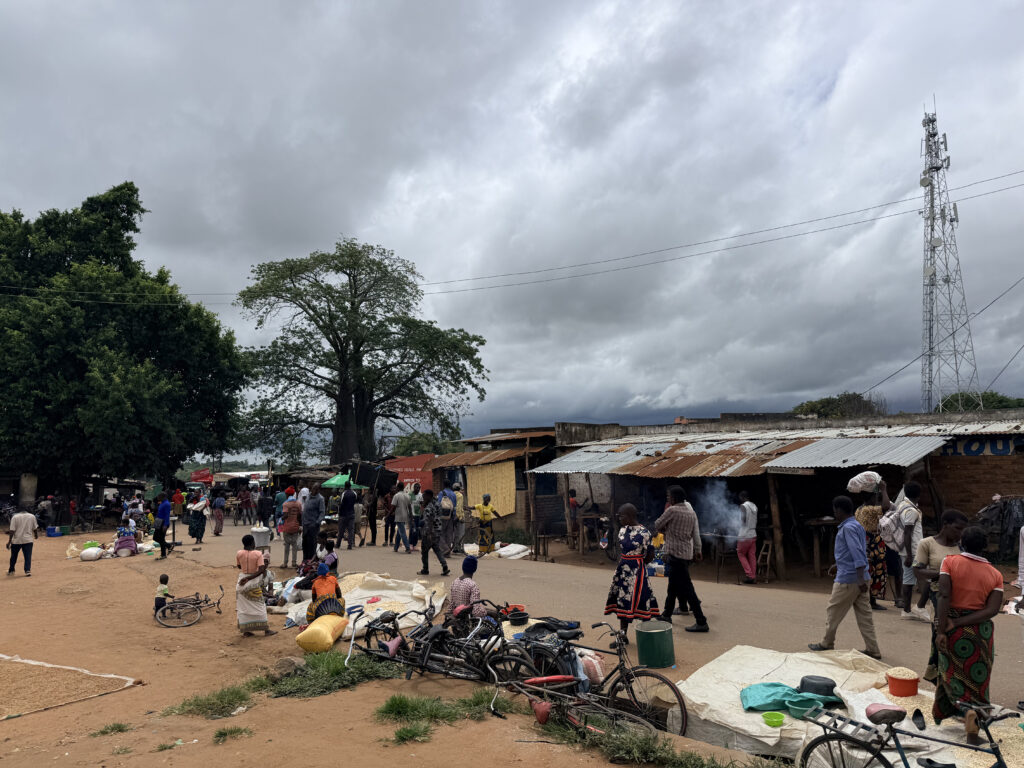
I was in Malawi, one of the countries hardest hit by climate change, to evaluate the Climate Just Communities (CJC) project, funded by the Scottish Government’s Climate Justice Fund and implemented by DAI Global UK in partnership with a consortium of local delivery partners.
At £8 million over three years, CJC Malawi worked across seven districts (Karonga, Salima, Neno, Machinga, Zomba, Phalombe, and Chikwawa), reaching over 100,000 people across eight Traditional Authorities with a total target population of roughly 460,000.
Roughly 92 per cent of Malawians depend on rain-fed water sources, which means every drought, every late onset of rains, every flood directly threatens food production, income, and survival. Recently, it has experienced cyclones and tropical storms — Cyclone Freddy in 2023 displaced over half a million people, killed nearly 700, and caused damage estimated at over $500 million. Malawi’s vulnerability is only increasing. Over half the population lives below the poverty line. Climate impacts are getting worse and the population is growing, which means their needs are multiplying.
The CJC programme approached rural development for climate resilience, taking the smallholder farming household as the central unit of delivery. The project channelled resources through pre-existing community structures such as village disaster risk management committees, village natural resource management committees, farmer clubs, irrigation clubs, village savings and loans associations, water management committees, and school DRM clubs. The project invested in their capacity to sustain adaptation actions beyond its cycle.
The design process itself was participatory. Communities underwent rapid engagement exercises, followed by detailed participatory vulnerability analyses (PRA), during which they identified their own climate risks, root causes, gaps in current responses, and priority interventions.
Interventions delivered across five themes:
- Disaster risk management: the project trained over 100 village committees in forest management and by-law development, supported the establishment of tree nurseries and afforestation, constructed check dams and flood-protection bunds, built evacuation centres, and set up early warning systems that combine indigenous and modern knowledge.
- Livelihoods security: the programme trained over 6,000 farmers in sustainable agriculture and conservation farming, promoted early-maturing and drought-tolerant crop varieties, established or rehabilitated 22 irrigation schemes, distributed goats through a livestock pass-on mode and set up beekeeping value chains. Organic fertiliser use jumped from 29 per cent at baseline to 74 per cent at endline.
- Some farmers reported more than doubling their maize production. Households with access to irrigation were now harvesting two to three times annually, growing rice, sweet potatoes, cassava, and vegetables, whereas previously they relied on a single rain-fed maize-and-beans season.The project supported nearly 10,000 people through village savings and loans groups (VSLA). Membership grew significantly, with women reporting dramatic increases in income and economic independence.Households that received goats through the pass-on scheme reported feeling noticeably more resilient.
- In project areas, the CJC partnership with VITALITE (a solar products provider) achieved high solar adoption— with VSLAs serving as both distribution and financing channels for solar home systems. Household survey data showed that beneficiaries were better prepared to deal with floods and dry spells and had relatively fewer income losses compared to households not reached by the project. Supporting greater stability in production and food security.
- WASH: The project drilled and rehabilitated boreholes, some fitted with solar-powered pumps and water tanks, and trained water management committees to collect fees and maintain infrastructure independently.
- Resilient schools: The project established over 120 DRR clubs, developed school disaster management plans, painted climate education murals, and rehabilitated water points and latrines across 80 schools.
- Gender equality and social inclusion: Women took on leadership roles in committees and participated in traditionally male-dominated activities such as irrigation farming and borehole repair. Women led in tree planting and natural resource management, serving as committee chairpersons and Water Management Committee members, running small businesses ranging from honey and vegetables to block-making, and accessing credit through VSLAs at rates lower than those of commercial lenders.
Engaging the local private sector
The development community talks a lot about locally led adaptation. CJC devolved decision-making to community structures, invested in local capabilities, and built on existing institutions rather than creating parallel ones. The endline evaluation confirmed strong community ownership across districts.
But too often, “locally led” is synonymous with “communities”. True local ownership means asking who in the local ecosystem can be part of delivering solutions sustainably. Who has the incentive to stay, understand the context, and keep reaching the people most impacted by climate change, even in the absence of donor funds?
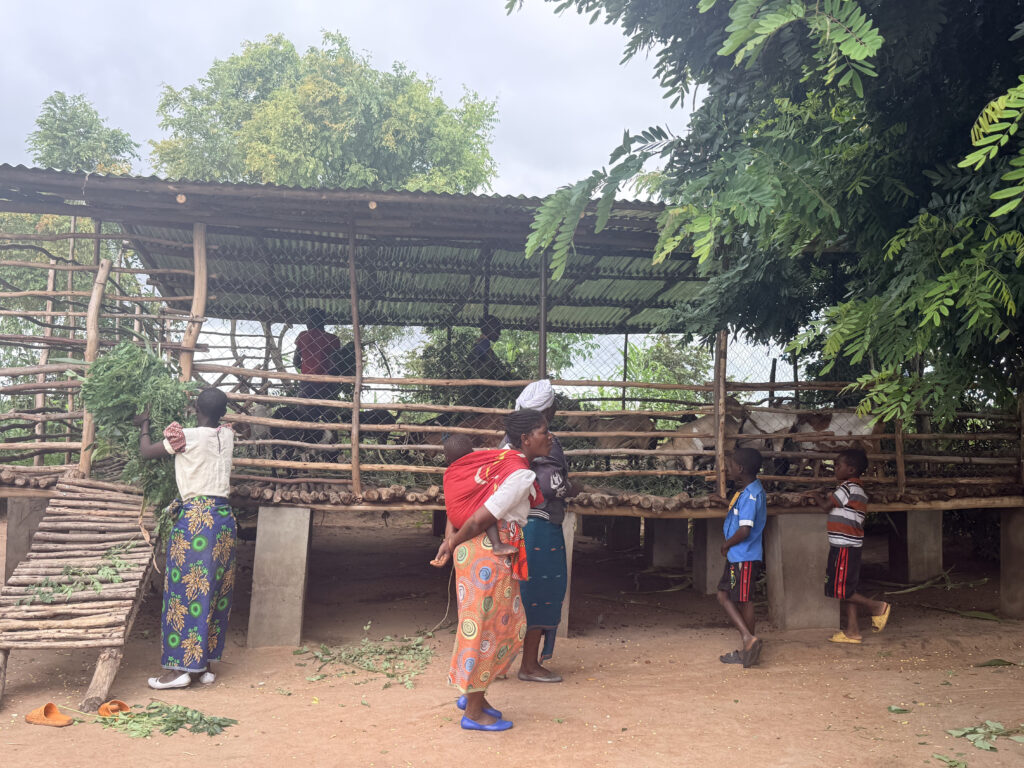
The answer lies with local actors who operate in the private-public space: agro-dealers, seed distributors, local entrepreneurs, domestic processors who buy from farmers, microfinance institutions, solar energy companies, and their networks of representatives and retailers. These actors are already embedded in Malawian communities. They are there when donors and programmes are not. And critically, they have a business incentive to keep showing up.
Before arriving in Malawi, I assumed that in one of the most economically constrained countries in the world, people couldn’t afford to buy things and that the private sector didn’t see climate as a priority. Surely market-based approaches have limited relevance here. I was wrong.
Malawi is indeed a low-income country, but farmers and communities are willing to invest in solutions that work for them. The private sector in Malawi is diverse: multinational firms alongside the entire chain of lead firms, processors, local dealers and distributors, retailers, and their field representatives. All want to grow their business. And they will, as long as they can offer solutions that make sense for the people they serve.
- Farmers were purchasing improved seeds for winter cropping when they could access them in time. The CJC project promoted early-maturing and drought-tolerant varieties that communities then adopted on their own.
- Solar companies like VITALITE Malawi were selling solar home systems and portable solar irrigation kits on a pay-as-you-go model, making clean energy affordable through instalment payments via mobile money. VITALITE achieved massive reach in project areas by partnering with implementing organisations and using VSLAs as distribution and credit channels.
- Agro-dealers were providing agricultural inputs (seeds, fertilisers, pesticides, etc) to farmers on credit.
- Microfinance institutions like VisionFund Malawi had built climate-related crop insurance and micro-health insurance into their lending products.
These businesses are finding ways to serve customers with the right terms and the right products – and some of them started with donor support:
- NASFAM, now the largest smallholder-owned farmers’ association in the country with over 100,000 members, was established with US Government funding in the 1990s.
- VITALITE began as a social enterprise with grant support before expanding across the region.
- VisionFund Malawi grew out of World Vision’s development work and is now a self-sustaining microfinance institution serving over 100,000 clients across 19 branches.
These organisations have matured into credible, self-sustaining market players. That trajectory is the model for scale.
Climate Solutions Are Not Always “Climate” Solutions
One of my key takeaways is that even in a climate programme, you cannot afford to think only in terms of conventional climate interventions. The tools that help people cope with climate change are often the same tools they use in their daily lives, such as access to finance, access to the right inputs at the right time, and diversified sources of income.
When floods or droughts destroy crops, farmers lose income, security and the ability to prepare for the next shock. But when you give a farming household an alternative income stream such as goat rearing through the CJC pass-on model, or beekeeping with bee drums and training, the evaluation data showed that farmers were noticeably more resilient and happier. Having some income security cushions the blow of climate variability because families can afford to prepare, to buy inputs for the next season, to keep children in school. The evaluation found that CJC participants’ mindsets had shifted toward self-reliance, with women reporting asset accumulation, including livestock, stronger housing, and start-up capital for businesses.
The evaluation also revealed that communities wanted greater access to capital to invest, prepare, and build resilience on their own terms. VSLAs were the most consistently effective mechanism in the whole evaluation but on their own they are not enough. The amounts saved are often too small to fund anything truly transformative. Communities need access to meaningful finance, and linking them to the formal and semi-formal financial sector is critical. The evaluation noted that, despite significant demand for productive-use solar, such as irrigation and incubators, the cost limits uptake. Creative financing through the private sector, as piloted by VisionFund and VITALITE, can help fill that gap.
Towards a Hybrid Approach
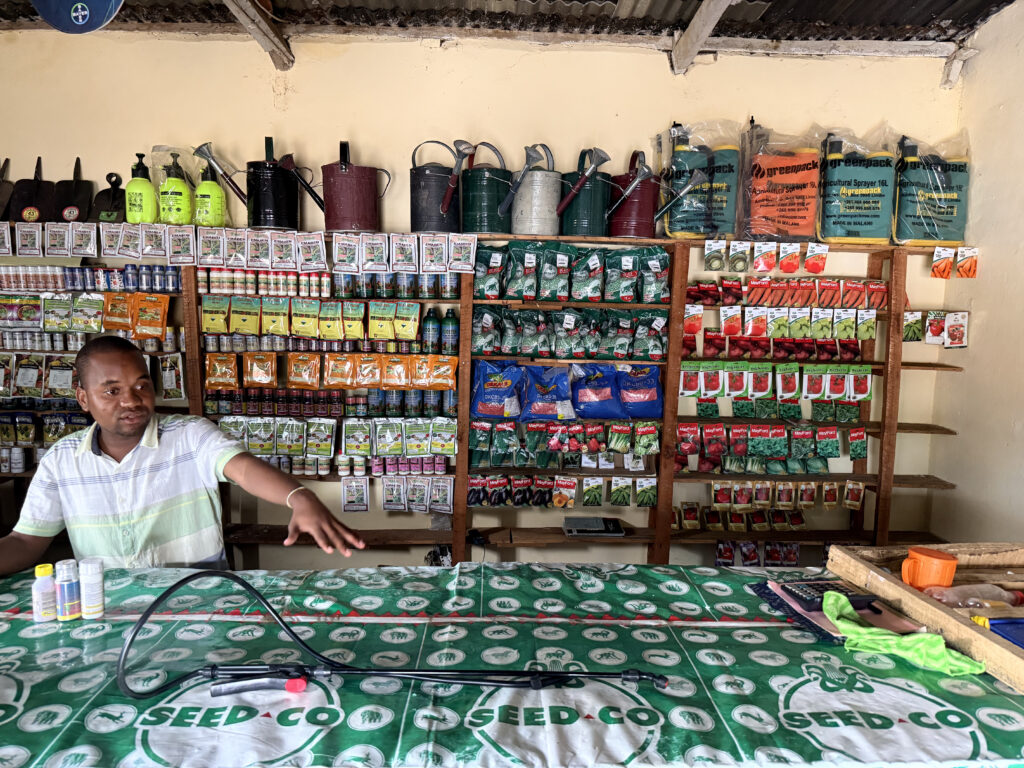
We need to start transitioning towards hybrid approaches that deliberately leverage local partners and market systems to achieve programme goals, while continuing to provide the direct support that communities need. We need to gradually and intentionally build the bridge between what donor-funded programmes deliver and what local private-sector firms, cooperatives, microfinance institutions, and agro-dealers can sustain commercially over time while still meeting “climate” outcomes.
This means designing programmes in which a portion of the budget goes towards facilitating private-sector engagement alongside community-level work. It means mapping the local market ecosystem early in the programme cycle and asking: which of our programme objectives could eventually be delivered by a local actor with the right incentive? It means helping these actors develop products, reach new customers, build distribution networks so that when the donor funding ends, the service does not. The CJC project showed early signs of this with the VITALITE solar partnership and the VSLA-linked financing model. The next generation of programmes should make such partnerships a core design feature.
The transition also means rethinking what we ask of community structures.
- We should link savings groups to microfinance providers who can offer appropriate credit products.
- We should be working with agro-dealers and processors who have a commercial reason to keep that knowledge flowing.
Community structures become the foundation for trust, social cohesion, and local governance. While the private sector provides the products, services, and capital that make resilience tangible.
This kind of transition takes time, which is why it needs to start now, not as a separate workstream but woven into the fabric of how climate programmes are designed and delivered.
A Message for Donors — In Malawi and Beyond
Donors have been funding farmer training on good agricultural practices and savings groups for years. The CJC evaluation found that soil conservation knowledge was high, but its transfer into practice remained low. Instead of investing in the same intervention cycle after cycle, we should invest in the actors who have a commercial incentive to get these messages across over time: the processors who need quality produce, the agro-dealers who want more sales, the traders who want to source a certain volume. These actors will keep delivering because it serves their business to do so.
If you want to scale up impact, facilitate the growth of local private sector actors who can reach the right people. Otherwise, the sector will keep doing the same things over and over again: training the same farmers, setting up the same groups and perhaps wondering why outcomes do not change at the pace the climate crisis demands.
This lesson applies to climate programming in any vulnerable country. Meeting climate-related goals for the most affected communities requires the private sector as a central pillar of programme design. The local agro-dealer, the domestic processor, the microfinance institution, and the solar entrepreneur are the actors who will be there long after the project closes. Investing in their capacity to serve climate-vulnerable populations is not just good development practice. It is the only realistic path to scale.
Malawi showed me that the potential is there. The question is whether we are willing to design programmes bold enough to unlock it.